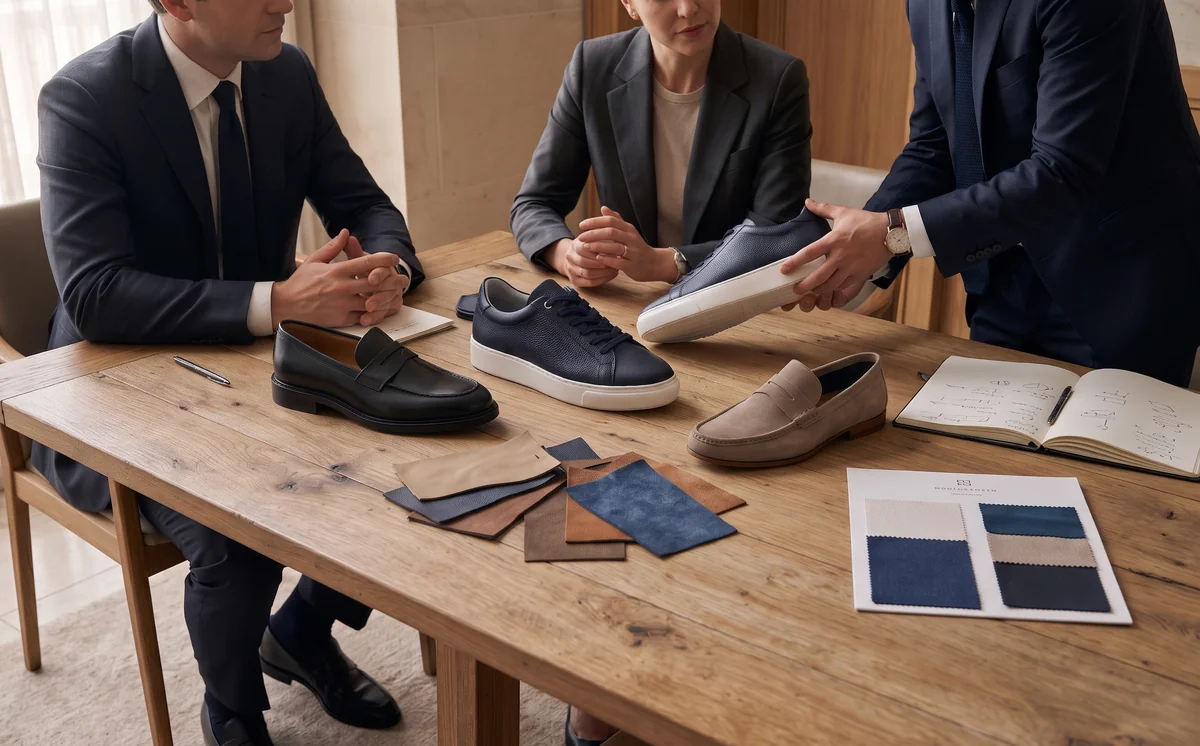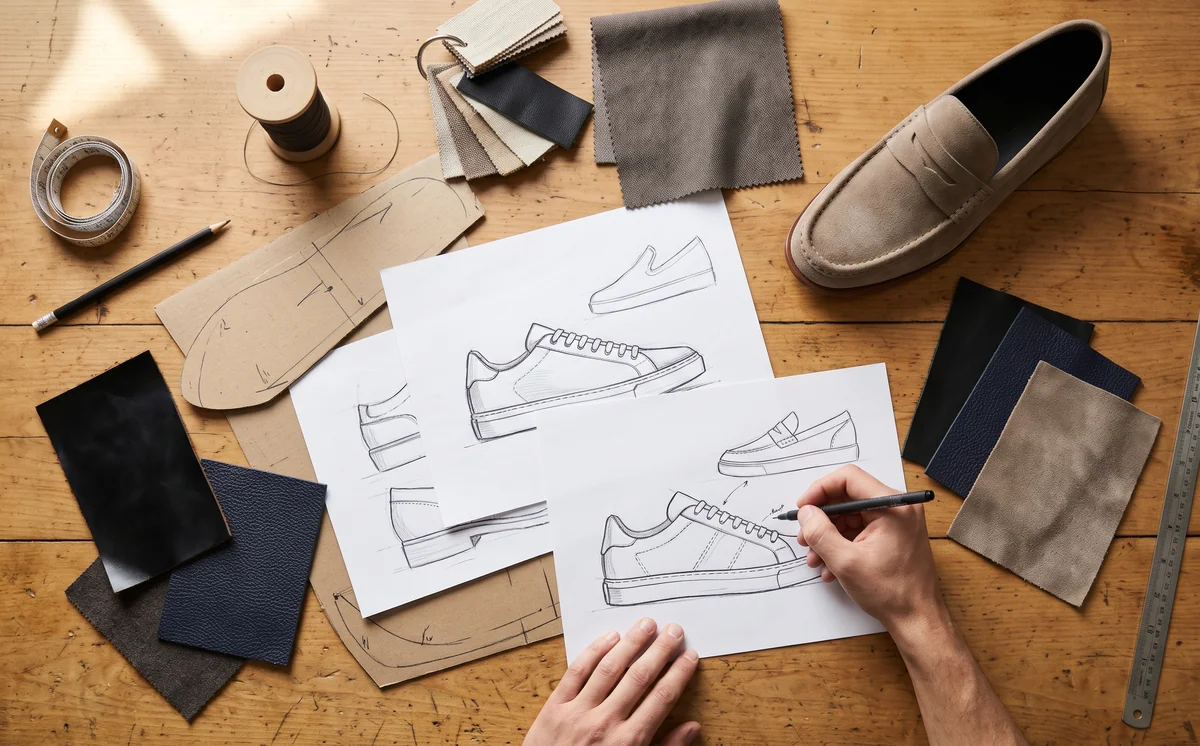

Opening properties often place the uniform order before most of the team has been hired. For clothing that works, because tailors can fix what arrives wrong. Shoes cannot be altered. A pair that is a size out has to be made again, so footwear needs a plan of its own.
How uniforms get away with guessing
The usual uniform procedure for a pre-opening runs like this. Sizes are assumed for each position from the expected team, the garments are delivered, and tailors go on site to fit staff one by one. Alterations absorb most of the error. Anyone who still does not fit gets a top-up order, often drawn from extra stock that was priced into the original order.
The property pays for that buffer either way. It works because cloth can be taken in or let out.
Why shoes cannot follow the same route
There is no alteration step for footwear. Every mismatch goes straight to a remake, with its own production time and its own shipping.
Timing makes it harder. Uniforms start first, so by the time staff have arrived and could give their sizes, it is late to begin production. Waiting for the full team pushes delivery past training and sometimes past opening. Guessing every size in one go means paying for pairs nobody can wear.
Produce in two batches
The approach we recommend for opening properties is to split the order.
1. Agree the departments and the models first.
2. Produce a first batch for part of the expected headcount, on a regular size curve centred on the middle sizes.
3. Hold the rest of the order. Nothing is cut for it yet.
4. As hiring goes on, collect real sizes from the people who have actually joined.
5. Produce the second batch to cover the sizes that are actually missing.
This avoids one blind production run for the whole team. The far ends of the size range are not made for people who do not exist yet, and the second batch is made to real sizes rather than predicted ones. The first batch can still miss, which is why the rest stays uncommitted until the people are there.
Build the first curve from the hiring plan
The first batch is only as good as the curve behind it. Build it from the department headcount and the recruitment plan, model by model. Keep the middle sizes heavy and the ends light.
If some roles are being filled by transfers from sister properties, collect those sizes first. Those sizes are real, not predicted.
Collect sizes through onboarding
The easiest moment to get a shoe size is when someone signs their contract. Add two fields to the onboarding form: usual shoe size, and the brand that size refers to. Sizes differ between brands, and the brand is what lets a size be converted properly.
Where people are not sure, two other routes help. Measuring devices can be sent to the property so staff measure their feet in centimetres. A run of sizes can be sent for people to try on, and those pairs then go to staff rather than to waste. How we handle sizing has the detail on all three.
Plan for the pairs that do not fit
Made-to-order pairs cannot come back. They are made in the property's own design, colours and branding, so they have no second buyer, and moving single pairs back from Portugal costs more than the pairs are worth.
That is the reason to batch, and the reason to agree up front what happens to a mismatch. The second batch is where predicted sizes get corrected.
A few spare pairs going into the property's own rotation is normal. Hotels keep hiring after opening, and new starters need shoes on their first day.
Pre-opening footwear checklist
- Department list and headcount per department, even if provisional
- Floors per department: stone, timber, tile, wet areas, carpet, outdoors
- Uniform designs and fabric swatches sent to the footwear supplier
- Models and colours agreed per department, with samples if needed
- First batch on a regular size curve for part of the headcount
- Shoe size and usual brand added to the onboarding form
- Sizes from transferring staff collected first
- Second batch ordered in time for training: four to five weeks plus shipping, or six to eight weeks if the materials have to be ordered
- Spare pairs agreed for new starters after opening
- Importer of record agreed, and delivery as one consignment or split by department
For the wider supplier questions, see our procurement guide to hotel staff footwear.
If you are opening a property, tell us the departments, the opening date and where hiring stands. We will plan the batches with you.